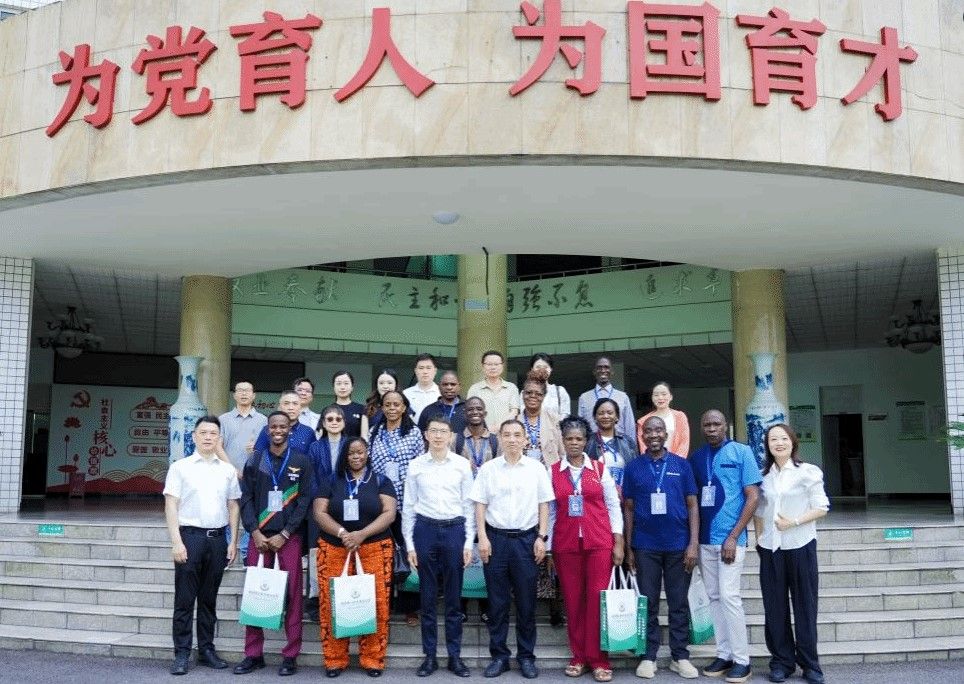
The opening ceremony of the 2026 Training Program on Modern Weaving Technology Upgrade for Zambia was held in Mingde Building of our university on June 9. Eleven key teachers majoring in textile and apparel, selected by the Technical Education, Vocational and Entrepreneurship Training Authority (TEVETA) of Zambia, embarked on a six-week study program. This initiative marks a new stage of pragmatic cooperation between our university and Zambia in textile vocational education and technology. Relevant university administrators attended the ceremony.
The opening ceremony was presided over by Tong Xiaohui, person-in-charge of the Integration of Industry and Education & International Exchange Office. All participants watched the university promotional video to gain a direct understanding of our school’s educational features, comprehensive strengths in textile majors and achievements in international cooperation. Song Yalu, head of the Textile Engineering College, delivered a welcome speech and briefed on training preparations. Tailored to the development realities of Zambia’s textile industry and vocational education, the university customized the training plan, selected seasoned teachers as the teaching team, and adopted an integrated teaching model combining theoretical lectures, on-campus practical training and off-campus enterprise visits to fully guarantee training outcomes.
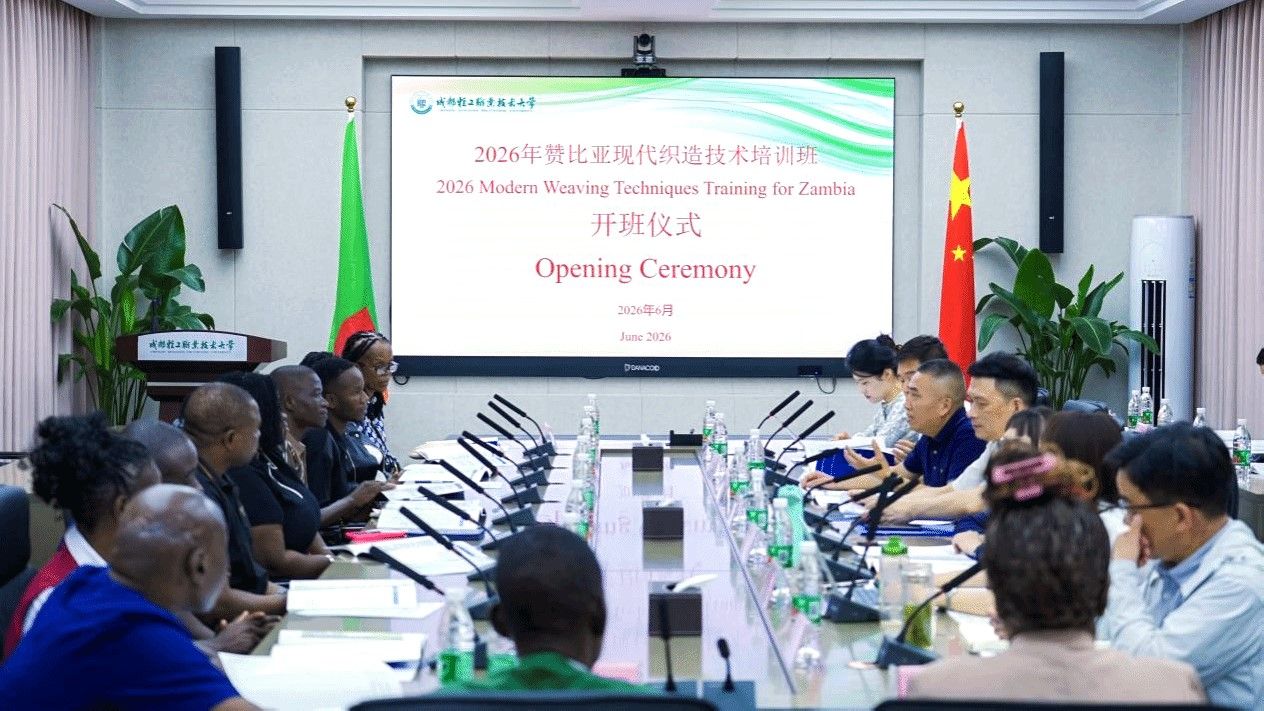
A Zambian trainee representative pledged to delve into professional expertise, and bring back advanced concepts and practical experience to Zambia after training to boost local textile vocational education and industrial growth. Following the ceremony, the project team elaborated on training schedules, teaching arrangements, campus administration and living support to lay a solid foundation for subsequent studies.
Closely aligned with Zambia’s local development demands, the program features four core well-structured and highly practical teaching modules:
Modern Weaving Technology Theory Module: Covering cutting-edge topics including new textile materials, innovative weaving processes, digital design and eco-friendly production to update trainees’ knowledge systems.
Intelligent Equipment Practical Training Module: Leveraging standardized training centers for hands-on drills on operation, programming, maintenance of advanced looms as well as application of production monitoring systems to strengthen practical capabilities.
Industrial Practice Linkage Module: Organizing field trips to leading local textile enterprises to learn practical experience in production management, quality control and supply chain operation, alongside case-based seminars.
Teaching Capacity Improvement Module: Instructing on modern vocational curriculum development and teaching methodologies, enabling trainees to translate technical know-how into classroom teaching content.
This training constitutes a key action of our university to respond to the Belt and Road Initiative and deepen international industry-education integration relying on our textile specialties. It will cultivate a cohort of core teachers proficient in modern weaving technology for Zambia to form a backbone for local vocational education development. Mature textile technologies and vocational education experience will be exported to elevate the quality of textile teaching and drive industrial transformation and upgrading in Zambia. Ties between our university, TEVETA and Zambian institutions will be strengthened to explore long-term cooperation mechanisms including teacher exchanges, joint curriculum development and collaborative talent training, building a model for China-Africa vocational education cooperation under the Belt and Road Initiative. Moving forward, the university will fully deliver logistical and service support to deepen technical exchanges, enhance friendly ties between the two sides, and jointly unlock a new landscape of win-win progress for China-Africa vocational education.